
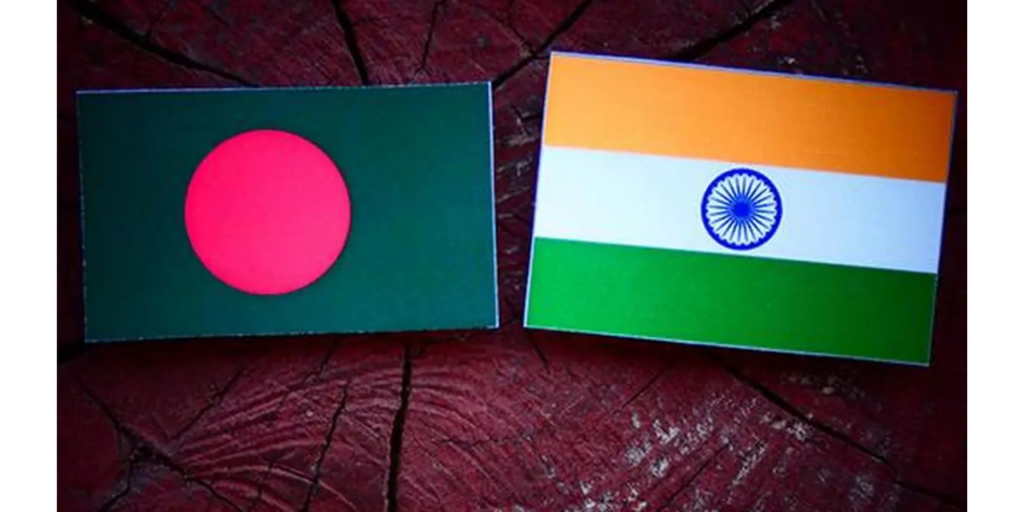
Port restrictions, non-tariff barriers and duty-free market access top the agenda as both countries seek to advance pending trade issues.
India and Bangladesh have resumed discussions under their Joint Working Group on Trade in New Delhi after a three-year hiatus, addressing longstanding bilateral trade concerns amid continuing political uncertainty between the two neighbours.
The discussions covered port restrictions, non-tariff barriers, trade through land routes and Bangladesh’s concerns over the continuation of duty-free access to the Indian market under the South Asia Free Trade Agreement (SAFTA) as the country graduates from least developed country (LDC) status.
The meeting was held at the joint secretary level and was intended to restart discussions on pending issues rather than make immediate decisions. “This meeting was not aimed at taking decisions, as it was at the joint secretary level. But it was important as it restarted discussions to take pending matters forward for decision-making at the next stages,” a source tracking the matter told BusinessLine.
The Bangladeshi delegation attended the meeting in New Delhi on October 8–9 and was led by Aysha Akter, Additional Secretary of the Free Trade Agreement (FTA) wing of Bangladesh’s Commerce Ministry.
Bangladesh Seeks Relief from Port Restrictions
Bangladesh has urged India to ease port-related restrictions, most of which were imposed last year and have affected exports of key products, including readymade garments, processed food, plastic products, wooden furniture and cotton waste.
Restrictions on shipments of jute and jute products from Bangladesh were also included in the discussions, according to the source.
Dhaka has additionally sought the removal of non-tariff barriers, including certain testing and certification requirements, which it says limit its export opportunities in the Indian market.
India Raises Concerns over Land-Route Trade and Tariffs
India, meanwhile, wants Bangladesh to remove restrictions on yarn shipments through land routes and reduce high tariffs on Indian imports.
The two countries are also addressing Bangladesh’s concerns about maintaining duty-free access to India under SAFTA as it transitions out of LDC status. The issue is significant for future bilateral trade arrangements as Bangladesh approaches this change in its trade status.
Bilateral Trade Reaches $12.71 Billion
India and Bangladesh recorded substantial trade flows in 2025–26. Bangladesh exported goods worth $1.75 billion to India, while Indian exports to Bangladesh totalled $10.96 billion.
China remains Bangladesh’s largest source of imports, with India ranking second.
Political Tensions Continue to Shape Relations
Bilateral relations have remained strained since former Bangladesh Prime Minister Sheikh Hasina was ousted in August 2024 and subsequently stayed in India. Relations have been affected by Dhaka’s demands for her extradition, concerns about the treatment of minorities in Bangladesh, and mutual allegations concerning the handling of security and political issues.
The transition to an interim administration under Muhammad Yunus was accompanied by diplomatic tensions. However, both countries continued engaging on trade, connectivity and other bilateral matters.
The political environment remains delicate under Prime Minister Tarique Rahman, whose Bangladesh Nationalist Party (BNP) won the February 2026 general election, creating the possibility of a reset in bilateral relations.
Although diplomatic engagement has continued, full normalisation of ties remains a work in progress, the source said.
The resumption of the Joint Working Group on Trade provides a platform for both countries to advance unresolved trade issues, with further decision-making expected at subsequent stages of discussions.