
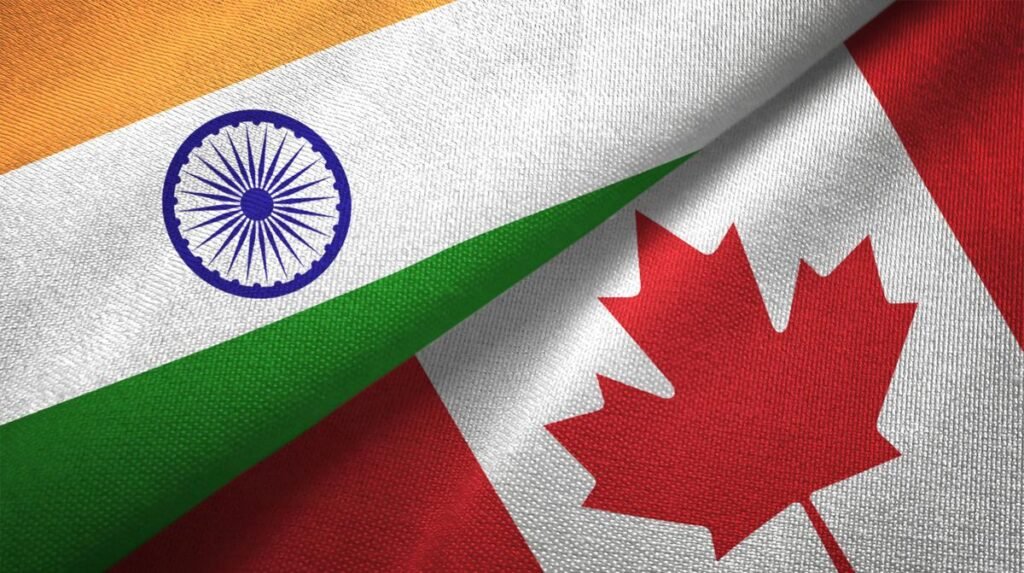
Canadian Trade Minister Maninder Sidhu will lead a 300-member business delegation to India from October 12 to 17, as both countries seek to expand bilateral trade and strengthen economic cooperation.
India and Canada are working towards concluding negotiations for a Comprehensive Economic Partnership Agreement (CEPA) by the end of 2026, following renewed engagement between the two countries. The fifth round of negotiations was held in Ottawa from October 5 to 9.
The renewed push for a trade agreement follows Canadian Prime Minister Mark Carney’s visit to India in March 2026, during which both countries set a target of increasing bilateral trade to CAD 70 billion by 2030.
Canada will send nearly 300 business delegates to India next week as part of its largest trade mission to the country in more than 30 years. Led by Canadian Minister of International Trade Maninder Sidhu, the delegation will visit Mumbai and Bengaluru from October 12 to 17.
According to an official statement, the mission aims to expand commercial ties and more than double bilateral trade by 2030. The delegation will focus on connecting Canadian businesses with Indian decision-makers, industry leaders and potential customers while developing partnerships and investment opportunities.
Bilateral Trade Reached CAD 30.4 Billion in 2025
In 2025, bilateral trade in goods and services between India and Canada totalled CAD 30.4 billion, according to the Canadian government.
Canada’s merchandise exports to India stood at CAD 3.9 billion in 2025, led by vegetables, mineral fuels and oils, and wood pulp. Imports of Indian merchandise into Canada amounted to CAD 9.7 billion, comprising precious stones and metals, machinery and pharmaceutical products.
The two countries are seeking to expand trade across multiple sectors, with the proposed CEPA expected to provide a framework for broader commercial engagement.
Canada Seeks to Diversify Export Markets
Canada is also looking to diversify its exports beyond the United States, with India forming a key part of its strategy to expand trade with other markets, according to the statement.
The Canadian Indo-Pacific Strategy, launched in 2022, identifies trade, security, sustainability, people-to-people ties and regional engagement as five strategic objectives.
Both countries have also agreed to deepen cooperation in combating organised crime, terrorism, violent extremism and the extradition of criminal offenders. These discussions come amid New Delhi’s concerns over activities of pro-Khalistani elements from Canadian soil.
The issues were discussed during talks between India’s National Security Adviser Ajit Doval and Canada’s David Morrison, Senior Deputy Minister of Foreign Affairs and International Affairs Adviser to the Canadian Prime Minister.
Trade and Investment Cooperation on the Agenda
During a meeting on the sidelines of the G20 Trade Ministers’ Meeting in Milwaukee, United States, on October 1, Indian Commerce and Industry Minister Piyush Goyal met Maninder Sidhu. The ministers discussed progress in the negotiations and efforts to deepen bilateral trade and investment ties.
A joint press statement said both sides welcomed sustained and constructive bilateral engagement over the past year, guided by mutual trust, respect for each other’s concerns and sensitivities, and a shared commitment to strengthening bilateral relations.
The statement also noted the potential for advancing a substantive bilateral defence relationship.
In the Doval–Morrison talks, both sides reviewed progress in bilateral security and law enforcement cooperation, including implementation of the shared Security Work Plan concluded in February 2026.
They agreed to deepen coordination and cooperation in combating transnational organised crime, terrorism and violent extremism, human and drug trafficking, cybercrime, extortion, and the extradition of criminal offenders.
Both countries also reaffirmed their commitment to identifying additional areas for practical cooperation, including exploring structured dialogues on cybersecurity and economic security.
The two sides agreed to strengthen existing institutional mechanisms and establish new channels, where appropriate, to facilitate streamlined communication and timely information-sharing on matters of mutual concern.
The meeting was part of the ongoing bilateral security dialogue at the National Security Adviser level. Previous dialogues in this format took place in New Delhi in September 2025 and in Ottawa in February 2026.
Diplomatic Differences Remain
Despite renewed engagement on trade and security, bilateral relations have faced diplomatic challenges. Relations deteriorated following allegations made by former Canadian Prime Minister Justin Trudeau in 2023 concerning a potential Indian link to the killing of Sikh separatist Hardeep Singh Nijjar.
India dismissed Trudeau’s accusations as “absurd”. In October 2024, India recalled its high commissioner and five other diplomats after Ottawa attempted to link them to the Nijjar case.
New Delhi also expelled an equal number of Canadian diplomats. However, Liberal Party leader Mark Carney’s victory in the parliamentary election in April last year helped rebuild relations.
Subsequently, both countries posted their high commissioners in each other’s capitals and agreed to revive several mechanisms to advance bilateral relations.
The planned Canadian trade mission and ongoing CEPA negotiations mark another phase in efforts to strengthen commercial engagement, diversify trade and expand investment opportunities between the two countries.