
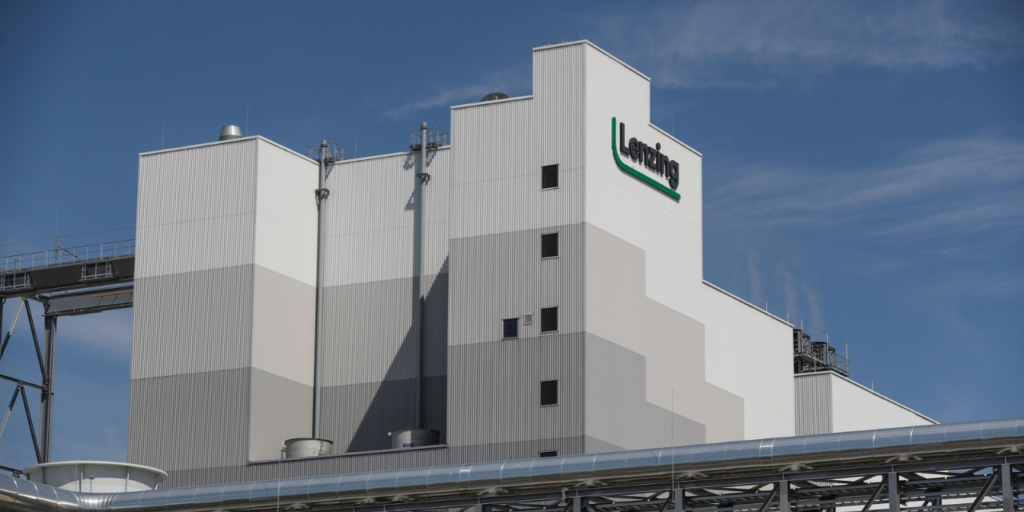
Lenzing Group reported revenue of EUR 1.93 billion for the first nine months of 2026, compared with EUR 1.97 billion in the previous year. Despite lower sales, adjusted EBITDA remained stable at EUR 353 million. The adjusted EBITDA margin also improved to 18.3%, supported by cost control and its ongoing business transformation.
Lenzing Reports Stable Adjusted EBITDA in First Nine Months of 2026
Lenzing Group reported stable earnings in the first nine months of 2026 despite a challenging global market environment. The company generated revenue of EUR 1.93 billion, down 2.3% from EUR 1.97 billion in the same period last year.
Market conditions remained difficult due to geopolitical tensions, including the conflict in Iran. Trade policy uncertainties and higher energy and chemical costs also affected the business.
However, adjusted EBITDA remained almost unchanged at EUR 353 million, compared with EUR 352.7 million in the previous year. Meanwhile, the adjusted EBITDA margin improved to 18.3% from 17.9%.
The company also recorded progress in the third quarter. Its adjusted EBITDA margin increased by 4 percentage points to 17.3%, compared with 13.3% in Q3 2025.
EBITDA Affected by Restructuring Costs and Impairments
Lenzing reported EBITDA of EUR 316.4 million for the first nine months, down 7% from EUR 340.4 million in the previous year.
The result included EUR 36.6 million in restructuring-related costs. This compares with EUR 12.3 million in the same period last year. As a result, the EBITDA margin declined to 16.4% from 17.3%.
The operating result (EBIT) stood at EUR -55.1 million, compared with EUR 20.6 million in the previous year.
This performance was significantly affected by non-cash impairment charges of EUR 136.1 million on long-term assets at the Heiligenkreuz and Grimsby production sites. These charges do not affect EBITDA.
Earnings before tax (EBT) amounted to EUR -126.9 million, compared with EUR -98.7 million last year. Earnings after tax stood at EUR -130.3 million, against EUR -105 million in the previous year.
However, after adjusting for impairment charges and restructuring effects, earnings after tax reached EUR 42.4 million. This compares with a loss of EUR 10.8 million in the previous year.
Capital expenditure also increased during the period. Investments in intangible assets, property, plant and equipment, and biological assets reached EUR 97 million, compared with EUR 93.2 million last year. Major projects included a new wood processing facility and improvements to water supply at the Lenzing site.
Lenzing Advances Its Strategic Transformation
In July 2026, Lenzing introduced its new strategic priorities: “Grow Nonwovens. Reset Textiles.”
The strategy focuses on improving profitability and reshaping the company’s product and production portfolio.
Key priorities include:
- Expanding profitable growth in the nonwovens business.
- Focusing the textiles business on premium and specialty applications.
- Strengthening the pulp and biorefinery business.
- Gradually reducing exposure to low-margin standard fibres.
- Optimising production facilities and operating costs.
The company is also implementing a performance improvement programme. After achieving more than EUR 200 million in savings during 2025, Lenzing aims to generate another EUR 120 million in savings against the 2025 baseline. The full earnings impact is expected by the end of 2027.
Cost Optimisation and Workforce Restructuring
As part of its cost reduction programme, Lenzing is targeting annual personnel cost savings of EUR 45 million. This involves reducing approximately 600 positions, mainly in administrative functions.
By September 30, 2026, employment relationships covering more than 260 full-time equivalents had been legally terminated. These measures are expected to generate annual savings of EUR 27 million.
Additionally, the company is targeting EUR 35 million in savings through energy and operating expense optimisation. Further savings will come from production network improvements and administrative cost reductions.
Lenzing is also reviewing its global manufacturing footprint.
The company continues the previously announced sales process for its Indonesian fibre production site. Meanwhile, production at Heiligenkreuz is planned to cease by the end of Q1 2027. Operations at Grimsby are scheduled to end by the close of 2027.
Lenzing is evaluating options to maximise the value of these assets. It has also formally notified the Austrian Public Employment Service (AMS) about the planned workforce reduction at Heiligenkreuz.
Lenzing Strengthens Financial Position
Lenzing has taken further steps to improve its financial structure and support its transformation.
In October 2026, the company successfully completed a capital increase of approximately EUR 300 million. It also entered into new financing agreements worth another EUR 300 million, with around half already contractually secured.
Full implementation of these measures is expected by the end of 2026. The additional funding will provide greater financial flexibility as the company continues its strategic transformation.
Outlook: Lenzing Targets Higher EBITDA in 2026
Lenzing plans to continue implementing its “Grow Nonwovens. Reset Textiles.” strategy throughout the remainder of 2026 and beyond.
The company aims to expand its nonwovens business while maintaining its position as an innovative producer of textile fibres. It also plans to increase the use of wood-based fibre solutions as alternatives to fossil-based materials.
Planned initiatives include converting textile fibre capacities into nonwoven fibre production. The company also plans to expand its portfolio in hygiene and filtration applications and develop new fibre products.
In the textiles business, Lenzing will focus on premium products, specialty solutions and strategic customer partnerships. At the same time, it will continue reducing its exposure to low-margin standard fibres.
Technologies such as TreeToTextile and LENZING™ Nonwoven Technology are expected to support growth across both business segments. The company also plans to strengthen its pulp business.
For full-year 2026, Lenzing expects adjusted EBITDA to reach EUR 430 million to EUR 460 million. This is above its 2025 adjusted EBITDA of EUR 425.6 million.
Over the medium term, the company aims to return to revenue growth and increase EBITDA by EUR 150 million. It also targets an EBITDA margin of 20% to 25% and a reduction in leverage to below 2.5 times.
However, actual results may differ from current expectations due to geopolitical developments, economic conditions and industry cycles.