
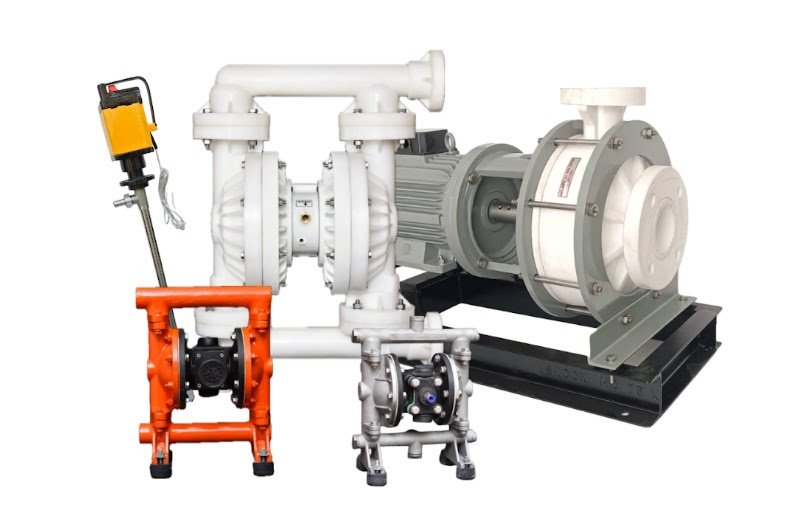
The Mumbai-based manufacturer addresses seven common misconceptions about air-operated double diaphragm pumps and explains how material selection, operating costs and application requirements affect performance.
Antlia Engineering Works has highlighted seven common misconceptions about air-operated double diaphragm (AODD) pumps. The guide aims to help industrial buyers make informed equipment decisions. It covers pump materials, chemical compatibility, energy consumption, maintenance and application requirements across industries such as chemicals, pharmaceuticals, paints and coatings.
Antlia Explains Common AODD Pump Selection Mistakes
Industrial fluid transfer plays an important role in several manufacturing sectors. These include chemicals, pharmaceuticals, paints and coatings, food processing and printing.
However, selecting the right pump involves more than checking its flow capacity. Buyers must also consider chemical compatibility, operating pressure, construction materials and maintenance requirements.
According to Antlia Engineering Works, incorrect pump selection can lead to corrosion, leakage, equipment failure and unexpected operating costs.
Meet Jain, Founder of Antlia Engineering Works, explained the reason behind the company’s guide.
“We regularly speak with buyers who select a pump on size or price alone, or who assume one material or one pump type will work for every fluid. A wrong specification can mean corrosion, leakage or unplanned downtime. We wrote this guide to give buyers clear, practical facts before they make that decision,” said Jain.
Seven Common Misconceptions About AODD Pumps
The guide highlights seven important points that industrial buyers should consider before selecting an AODD pump.
1. Not All Diaphragm Pumps Work the Same Way
AODD pumps use compressed air to operate two diaphragms through an air distribution system. Other diaphragm pumps use mechanical or hydraulic systems.
AODD pumps are suitable for applications that require self-priming, variable flow and the handling of certain challenging fluids. They can also operate without liquid during dry-running conditions, provided the pump is designed for it.
Therefore, buyers should evaluate several factors before making a selection. These include flow rate, discharge pressure, viscosity, temperature and solids content.
2. No Single Pump Material Suits Every Chemical
Material selection is essential for reliable pump performance. Different materials offer different levels of chemical resistance.
Antlia highlights four commonly used materials:
- Polypropylene (PP)
- Polyvinylidene fluoride (PVDF)
- Stainless steel SS-316
- Aluminium
However, no single material is suitable for every application. Buyers must consider the chemical type, concentration, temperature and operating pressure before selecting the pump construction.
3. AODD Pumps Still Have Energy Costs
AODD pumps do not require an electric motor at the pumping point. This makes them useful in applications where electrical equipment may be undesirable.
However, they operate using compressed air, which requires energy to generate.
The overall operating cost depends on compressor efficiency, air consumption, operating pressure, system leakage and running hours.
Therefore, correct pump sizing is important. It helps manufacturers manage compressed air consumption and evaluate the total cost of ownership.
4. PTFE Is Not Always the Best Diaphragm Material
PTFE is widely recognised for its chemical resistance. However, it is not automatically the best choice for every pumping application.
Diaphragm performance also depends on flexibility, temperature, pressure cycles and mechanical fatigue.
Other materials, such as Santoprene and Neoprene, may offer better performance in specific operating conditions.
As a result, buyers should consider both chemical compatibility and mechanical requirements when selecting diaphragm materials.
5. AODD Pumps Serve Multiple Industries
AODD pumps are used across several industrial sectors. Their applications extend beyond chemical manufacturing.
Common applications include:
- Pharmaceutical manufacturing
- Paints and coatings
- Printing and packaging
- Wastewater treatment
- Mining and mineral processing
- Adhesives and specialty chemicals
- Oil and petroleum-related industries
- Food and beverage processing with suitable hygienic configurations
This wide range of applications makes correct pump selection particularly important.
6. Imported Pumps Are Not Automatically Better
Pump quality depends on design, materials, testing and actual operating performance. The country of manufacture alone does not determine product quality.
Antlia encourages buyers to compare domestic and international suppliers using measurable criteria.
These include quality control, spare parts availability, technical support, delivery times and total operating costs.
According to the company, Indian manufacturers can offer practical alternatives through application-specific solutions and local technical support.
7. AODD Pumps Are Not Suitable for Every Application
Different pump technologies serve different operating requirements.
For example, centrifugal pumps are often suitable for continuous transfer of compatible, relatively low-viscosity fluids. Barrel pumps are designed to transfer liquids directly from drums and barrels.
In comparison, AODD pumps are useful when applications require pneumatic operation, variable flow, self-priming or the handling of certain viscous fluids and liquids containing solids.
Therefore, selecting the right pump depends on the specific process requirements.
Supporting Industrial Buyers in India
India’s chemical, pharmaceutical, paints, coatings and specialty chemical industries require reliable fluid-handling equipment.
Domestic pump manufacturers are increasingly developing application-specific solutions to meet these requirements. They also offer local technical assistance and access to spare parts.
Meet Jain highlighted the importance of evaluating suppliers on performance rather than their country of origin.
“Indian buyers have good reason to be careful with critical equipment, and they should compare any supplier, domestic or imported, on the same measurable parameters. That means material specifications, testing, spare parts availability, technical support and delivery times. When Indian manufacturers meet those standards, they are a practical alternative for many industrial applications, with the added benefit of faster response and local support,” said Jain.
AODD Pump Selection: Key Points for Buyers
Antlia’s guide also provides a practical checklist for buyers before purchasing an AODD pump.
Flow and pressure: Check the actual process flow requirement and discharge pressure. Also confirm the available compressed air pressure.
Material selection: Ensure that all wetted components are compatible with the chemicals being transferred. Select the diaphragm according to operating conditions.
Operating costs: Evaluate air consumption against the available compressor capacity.
Maintenance and support: Check spare parts availability, servicing requirements and the manufacturer’s technical support.
A properly selected pump can improve fluid transfer reliability, reduce maintenance interruptions and support better process efficiency.
Through this guide, Antlia Engineering Works aims to help industrial buyers understand AODD pump technology and make more informed equipment decisions.