
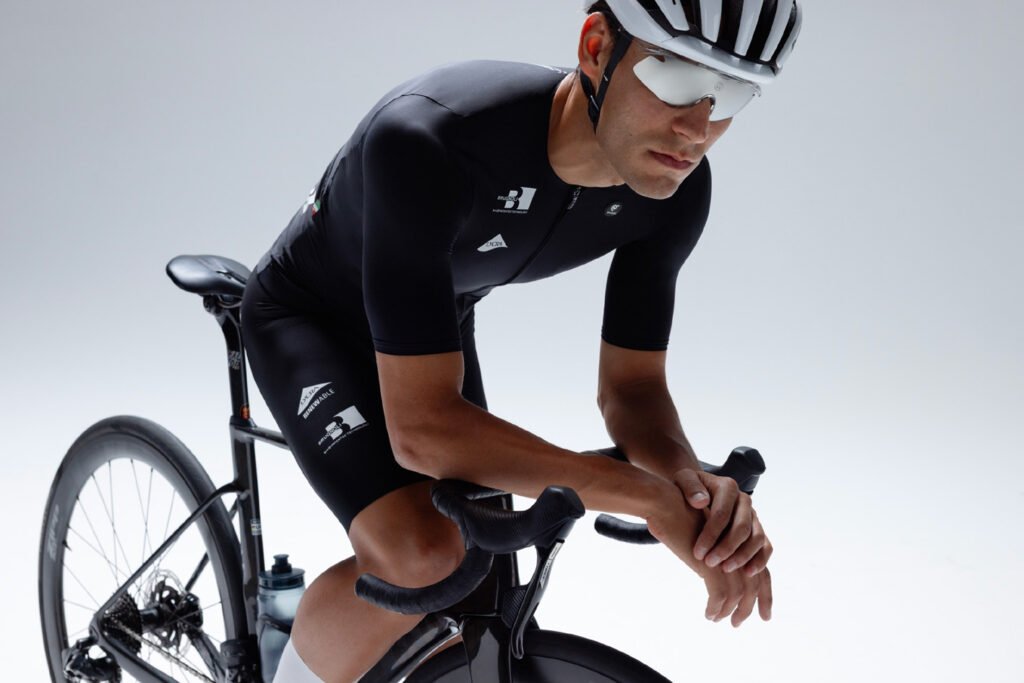
The PaceSetter project combines renewable fibres, compression, comfort and durability to develop high-performance cycling apparel with a lower reliance on conventional raw materials.
Brugnoli, The Lycra Company and Italian cycling apparel specialist Pissei have joined forces to develop high-performance cycling apparel using fabrics containing 89% bio-based materials.
The collaboration, known as the PaceSetter project, combines bio-based polyamide from Fulgar with Renewable Lycra fibre from The Lycra Company. The aim is to increase the use of renewable raw materials in premium sportswear while maintaining the performance needed for competitive cycling.
The resulting collection includes cycling shorts and a jersey made with fabrics developed by Brugnoli.
New Cycling Fabric Combines Renewable Fibres
The PaceSetter project features Brugnoli’s Br4/E1 fabric, the latest development of its patented Br4 technology. The fabric is used in the cycling shorts and combines two bio-based fibre innovations.
These include EVO bio-based polyamide from Italian manufacturer Fulgar and Renewable Lycra elastane from The Lycra Company.
The EVO polyamide is derived from castor beans and corn. Meanwhile, Renewable Lycra fibre contains 70% bio-derived content sourced from industrial corn.
By combining these materials, Brugnoli has developed a technical fabric containing 89% bio-based materials. It is designed to meet the demanding performance requirements of competitive cycling.
The development demonstrates how renewable raw materials can be incorporated into technical sportswear without overlooking comfort, stretch and durability.
Br4/E1 Technology Focuses on Performance and Resource Efficiency
Br4/E1 builds on Brugnoli’s patented Br4 technology, which was introduced more than a decade ago. The technology focuses on combining high-performance stretch fabrics with reduced environmental impact.
Brugnoli uses proprietary dyeing and finishing processes to improve production efficiency. According to the company, these processes reduce water and energy consumption by 20% compared with conventional methods.
The company also reports that its bio-based raw materials can reduce climate change impact by up to 45% compared with conventional fibres. This reduction applies to the materials themselves, rather than the complete finished garment.
In addition to its material composition, Br4/E1 is engineered to deliver several performance benefits:
- High compression and muscle support.
- Freedom of movement during cycling.
- Improved breathability.
- Odour control.
- Comfort for demanding sports applications.
These properties build on Brugnoli’s existing Explosive Technology, supporting the technical requirements of high-performance cycling apparel.
Renewable Lycra Fibre Supports Stretch and Durability
Renewable Lycra fibre is another key component of the Br4/E1 development.
It is a bio-based version of Lycra Xtra Life, which is designed to provide enhanced durability and resistance to degradation.
Its inclusion helps combine renewable material content with the stretch and performance characteristics required in technical cycling apparel.
The collaboration brings together advances in fibre composition and fabric engineering. This approach aims to address the growing demand for more responsible raw materials while maintaining the functional properties expected from premium sportswear.
The partners believe the project demonstrates the potential to increase bio-based content in high-performance apparel without compromising the requirements of professional athletes.
Industry Partners Highlight Performance and Sustainability
Brugnoli CEO Massimiliano Denna said the development reflects the company’s long-standing efforts to combine environmental responsibility with fabric performance.
“For more than ten years we have worked to live up to our claim of zero compromises between environment and performance,” said Denna.
“With the collaboration of The Lycra Company and its latest innovation, Renewable Lycra fibre, we can now present Br4/E1 and reach a level of bio-based content that a few years ago seemed unthinkable in a high-performance technical fabric, without giving up anything in terms of compression, muscle support and comfort.”
Denna also highlighted Pissei as a natural partner for the project. He noted the company’s experience with Brugnoli