
Overview
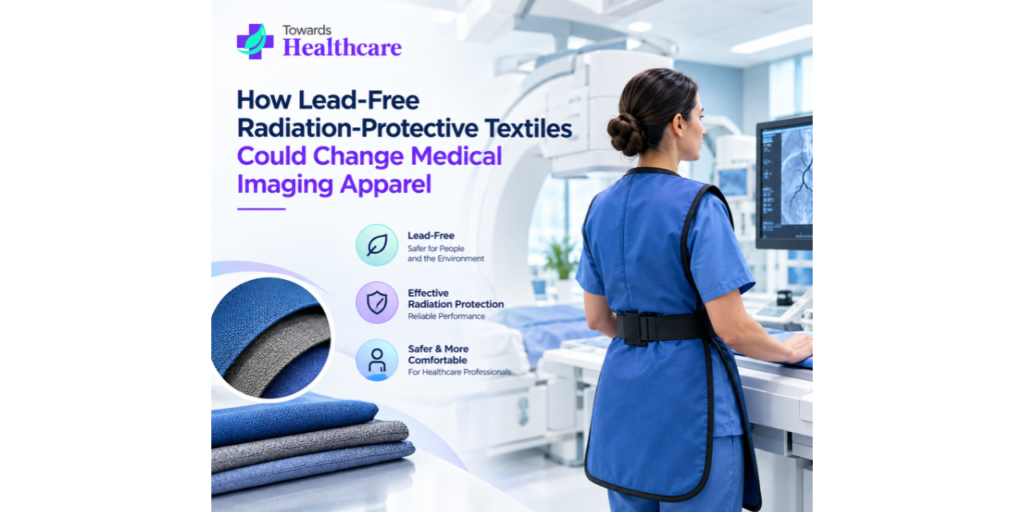
Medical imaging professionals often wear protective aprons during procedures involving X-rays and fluoroscopy. Traditional lead-based apparel provides radiation shielding, but its weight, handling requirements and end-of-life disposal create challenges.
Lead-free radiation-protective textiles offer another approach. By combining high-density elements with flexible polymers and engineered textile structures, manufacturers are developing alternatives that aim to reduce garment weight while maintaining suitable radiation protection.
Why Medical Imaging Apparel Needs New Materials
Radiologists, interventional cardiologists and imaging technicians may wear protective garments for extended periods. Heavy aprons can contribute to physical discomfort and musculoskeletal strain, making weight an important factor in garment design.
Lead also raises environmental and waste-management concerns because it is a toxic metal. However, replacing it requires more than finding a lighter material. Any alternative must provide verified shielding performance under the intended operating conditions.
How Lead-Free Shielding Textiles Work
Researchers are investigating materials such as bismuth, tungsten, tin and barium compounds as alternatives to conventional lead shielding.
These elements can be incorporated into polymer composites, coatings and flexible protective layers. The resulting materials can be designed for aprons, thyroid shields and other radiation-protective apparel.
A 2016 study found that some experimental lead-free material samples containing high proportions of shielding elements were lighter than a conventional 0.5 mm lead-equivalent garment while providing promising attenuation performance under the tested diagnostic X-ray conditions. However, laboratory results do not establish that every commercial lead-free apron offers equivalent protection.
Where Textile Innovation Can Make a Difference
Lightweight protective apparel: Flexible composite layers could help manufacturers develop aprons that are easier to wear during long imaging procedures.
Multilayer garment construction: Combining different shielding materials within polymer layers may help balance radiation attenuation, flexibility and weight.
Specialised protective accessories: Lead-free composites could be explored for thyroid shields, protective panels and other equipment used in radiology and interventional procedures.
Improved material design: Textile manufacturers can investigate coating methods, flexible substrates and composite formulations to improve durability and garment performance.
Challenges Manufacturers Must Address
- Radiation protection: Shielding performance varies with material composition and X-ray energy. Products require appropriate testing.
- Weight versus protection: Reducing garment weight must not compromise the required shielding level.
- Durability: Repeated bending, storage and handling can damage protective layers and affect performance.
- Manufacturing costs: Specialised materials and production processes may increase initial costs.
- Environmental impact: Lead-free does not automatically mean environmentally harmless. The safety, recyclability and disposal of alternative materials also require assessment.
Opportunities for Companies in the Industry
- Technical textile manufacturers: Develop flexible substrates and composite layers for radiation-protective apparel.
- Medical-device companies: Partner with material developers to design and validate lighter protective garments.
- Specialised material suppliers: Explore formulations using tungsten, bismuth and other suitable shielding elements.
- Testing laboratories: Provide radiation attenuation, durability and product-performance testing services.
- Healthcare procurement suppliers: Evaluate certified alternatives based on protection, weight, lifespan and total ownership cost.
What Comes Next for Radiation-Protective Textiles?
Lead-free materials could create new opportunities in medical clothing by combining radiation shielding with improved ergonomics. However, performance varies across formulations, and not every alternative match’s lead-based products under all conditions. Independent testing and appropriate quality controls remain essential.
For manufacturers, the opportunity lies in developing materials that meet clinical requirements while addressing practical concerns such as weight, durability and disposal.
Towards Healthcare supports healthcare and medical-device businesses through market intelligence, competitive analysis and strategic consulting to assess emerging material technologies, supplier opportunities and potential growth areas in medical textiles.
Sources:
https://www.towardshealthcare.com/insights/medical-imaging-market-sizing
https://www.towardshealthcare.com/insights/medical-clothing-market-sizing
https://www.towardshealthcare.com/insights/medical-imaging-reagents-market-sizing