
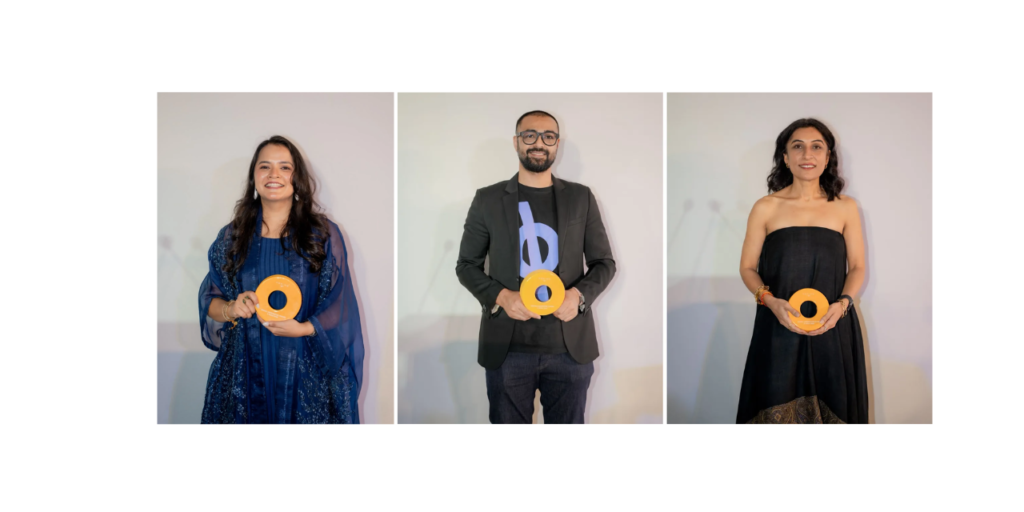
Noida-based Paiwand Studio wins the €50,000 first prize, while Without and A Blunt Story are recognised for developing alternatives to conventional materials.
Luxury group Kering has brought its Generation Award to India for the first time, recognising three startups developing circular solutions for the fashion and luxury industries. Announced at the Embassy of France in New Delhi on 13 October 2026, the inaugural Indian edition awarded first place to Paiwand Studio for transforming pre-consumer garment waste into new handloom fabrics and embroidery. Without and A Blunt Story secured second and third place, respectively. <Cite refs={[“turn371365search0″,”turn371365search1”]}/>
Paiwand Studio Wins First Prize
Noida-based Paiwand Studio, founded by Ashita Singhal in 2018, won the award for converting discarded pre-consumer textiles into new handloom fabrics and embroidery. The studio combines material reuse with traditional craftsmanship and works with weavers and artisans to transform textile waste into new materials.
Paiwand Studio received a prize of €50,000. Singhal said the recognition could help the business reach new customers and establish relationships with luxury companies.
“This really opens doors for us to a market that would otherwise have been very difficult to crack,” Singhal said.
She added that mentorship and access to new markets could be especially valuable for the business. Singhal had previously been a runner-up in the Circular Design Challenge in 2021.
Without and A Blunt Story Recognised for Material Innovation
Pune-based Without, founded by Anish Malpani, secured second place. The company uses a patented process to transform multi-layer plastic packaging and soiled textiles into materials for products such as eyewear and packaging.
Ghaziabad-based A Blunt Story, founded by Chandni Batra, came third. Its plant-based sole material is designed as an alternative to conventional footwear materials derived from crude oil, including ethylene-vinyl acetate (EVA) and thermoplastic polyurethane (TPU).
The three winners represent different approaches to circularity, from textile waste reuse and recycling to the development of alternative materials for footwear.
All three startups will receive an all-expenses-paid, 10-day trip to Europe. The programme will give them opportunities to meet Kering’s luxury houses, suppliers and industry peers. They will also have the opportunity to attend the ChangeNOW Summit in Paris in 2027.
The award programme includes access to design and production teams, along with mentoring in areas such as communication, finance and business growth.
Why Kering Chose India
Kering’s decision to introduce the award in India reflects the country’s role as both a growing luxury market and a source of innovation, entrepreneurship and craftsmanship.
Marie-Claire Daveu, Kering’s chief sustainability and institutional affairs officer, described India as one of the most vibrant ecosystems for innovation and creative thinking.
India was also among the growth markets highlighted by Kering chief executive Luca de Meo at the group’s Capital Markets Day earlier in 2026. The company’s priorities include reducing environmental impact, improving resource efficiency, investing in craftsmanship and developing next-generation materials.
Kering’s sustainability approach also includes extending product life through repair and resale, alongside the use of digital twins. These priorities align with the award’s focus on circular solutions that could be applied across fashion and luxury supply chains.
Reliance Brands Supports the India Edition
Kering partnered with Reliance Brands Limited (RBL) to bring the award to India. RBL operates more than 1,855 retail doors across the country and represents international luxury brands including Burberry, Tiffany & Co., Valentino and Bottega Veneta.
The R|Elan Circular Design Challenge, in partnership with the United Nations in India, served as the award’s exclusive nominating partner.
Launched in 2019 by R|Elan, RBL’s next-generation fabric brand, and Lakmé Fashion Week, the Circular Design Challenge supports emerging designers and businesses working on circularity. It opened to international designers in 2023.
According to RBL group vice-president Jaspreet Chandok, the partnership aims to connect emerging innovators with international industry expertise and help promising ideas develop commercial opportunities.
For the first Indian edition, Kering focused specifically on circularity rather than covering every area of sustainability. Daveu said this narrower approach would help the jury identify startups working on relevant solutions, with the possibility of including other themes in future editions.
Jury Brings Together Fashion and Sustainability Experts
The India edition was judged by representatives from fashion, luxury, sustainability and international development.
The jury included Marie-Claire Daveu; designers Manish Malhotra and Rahul Mishra; Sumeet Yadav, CEO of RBL; Stefan Preisner, United Nations coordinator; and Pascal Morand, executive president of the Fédération de la Haute Couture et de la Mode.
Designer Rahul Mishra emphasised that sustainability should include social impact, employment, livelihoods and community empowerment, alongside material innovation and waste reduction.
He also highlighted the potential to combine India’s traditional craftsmanship and community-based production with the research, technology and innovation capabilities of international luxury groups.
India’s established practices of repairing, reusing and recycling materials offer a foundation for newer circular business models. Startups are combining this knowledge with technology and contemporary product development to explore new applications for recovered materials.
From Award Recognition to Commercial Opportunities
For the winning startups, the award offers more than prize money. Access to Kering’s network could help them connect with potential partners and explore how their innovations might be used in larger supply chains.
Previous Kering Generation Award winners include Melephant, a Chinese startup developing bio-based dyes from organic waste. Its work with Chinese fashion group Ellassay demonstrates how industry connections can support the commercial development of new materials.
Without founder Anish Malpani said he hopes to establish a demonstration plant and its first commercial plant in India within the next five years. The company also aims to serve international markets.
However, integrating new materials into luxury supply chains can take time. Daveu noted that the process may take nearly 10 years, from initial contact with a startup to establishing that its raw materials meet the quality requirements for use in production.
Kering also aims to build connections between current winners and previous award recipients, creating a wider community of sustainability innovators.
The long-term impact of the India edition will depend on how these startups develop their technologies, expand production and establish commercial partnerships. Kering’s launch of the award in India marks a new step in connecting the country’s circular fashion innovators with the global luxury industry.