

By – Kam Raghavan, Chief Commercial Officer, MAS Holdings India
India’s apparel industry stands at a defining moment. As global supply chains continue to diversify and brands seek reliable manufacturing partners, India has a unique opportunity to strengthen its position as one of the world’s leading apparel sourcing destinations. While the country already possesses many of the essential building blocks, the next phase of growth will depend on creating a truly integrated, innovation-led manufacturing ecosystem.
India is a globally competitive apparel manufacturing hub, but there is still progress to be made before it becomes fully vertically integrated. The country has strong capabilities across knits, wovens, and high-end synthetic activewear and sportswear, supported by a high-quality fibre and fabric base in manufacturing hubs such as Gujarat. Combined with abundant labour, cost competitiveness, and government-backed apparel parks, these strengths position India well for the continued expansion of the textile and apparel sector.
However, the expectations of global brands are evolving rapidly. Today, manufacturers are expected to deliver faster speed-to-market, continuous product innovation, and sustainable, compliant operations. End-to-end supply chain transparency, coupled with greater in-country vertical integration, has become a critical differentiator. At the same time, several international brands are making retailing in India a core part of their long-term strategy, making sustainable local sourcing an increasingly important enabler.
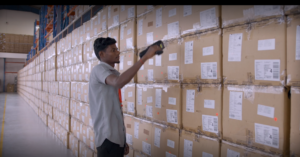
To compete effectively with manufacturing powerhouses such as China, Vietnam, and Bangladesh, India must accelerate the development of integrated manufacturing ecosystems. This requires an incubator-style approach where every component of the supply chain including fabrics, trims, packaging, logistics, machine servicing, and other supporting services is near manufacturing facilities. Such an ecosystem can significantly improve efficiency, reduce lead times, and enhance overall competitiveness.
One area that requires immediate attention is the supply of synthetic fabrics. India currently faces a gap in domestic synthetic fabric production, resulting in a reliance on imports. Importing these materials increases lead times while adding duties and inbound logistics costs, ultimately impacting the competitiveness of Indian manufacturers. Strengthening domestic capabilities in this segment through targeted investments will be essential to building a more resilient and self-sufficient supply chain.
Technology and innovation must also become central to India’s manufacturing growth story. As the industry becomes more competitive, adopting advanced manufacturing technologies, modern production processes, and continuous product innovation will increasingly differentiate successful manufacturers. Yet, many businesses continue to rely on legacy practices that slow progress. Since most Indian manufacturers operate on thin margins, investments in technology and innovation are often deferred. Despite these financial realities, these investments cannot remain optional as they must become an integral part of every manufacturer’s long-term growth strategy.
For MAS Holdings in India, the key to winning globally, is also being able to win locally. If innovation and technology can create templates for efficient, low-cost manufacturing within India, those same capabilities can be successfully leveraged for exports, where earning potential is even greater. India’s domestic market itself presents a significant growth opportunity. Rising income levels are creating a more aspirational consumer who is increasingly willing to invest in higher-quality products. At the same time, consumer preference for products carrying the ‘Made in India’ label continues to strengthen. Together, these trends make the domestic market an attractive and sustainable foundation for manufacturers looking to scale.
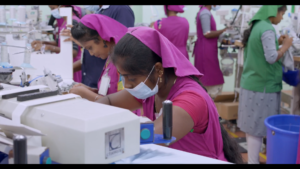
Finally, industry-government collaboration will be critical to creating a globally competitive textile and apparel ecosystem. Achieving this vision will require coordinated investments in infrastructure, innovation, sustainability, workforce development, trade facilitation, and ease of doing business. The Government of India’s progress on multiple Free Trade Agreements (FTAs), along with initiatives such as the PM MITRA Parks, represents an important step towards building integrated manufacturing ecosystems capable of supporting the industry’s next phase of rapid expansion.
India has all the ingredients to emerge as one of the world’s most competitive apparel manufacturing destinations. By strengthening vertical integration, investing in technology and synthetic capabilities, building collaborative manufacturing ecosystems, and leveraging both domestic demand and export opportunities, the country can unlock its full potential and establish itself as a preferred global sourcing hub for the future.