
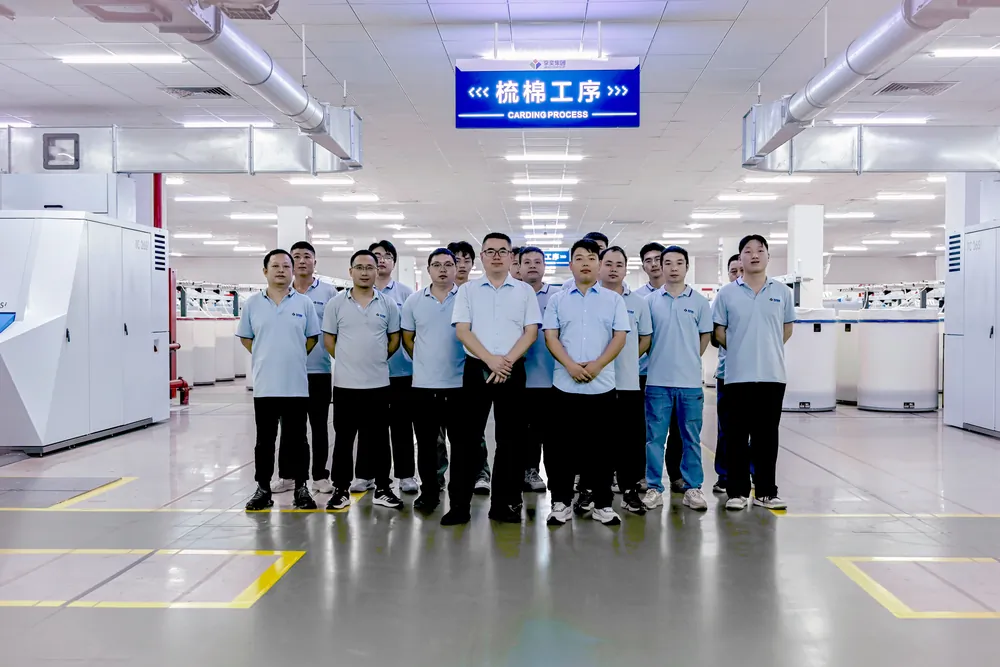
The automated can transport system improves material flow, reduces manual handling and supports continuous production, with Jingyi deploying approximately 3,600 T-CAN units after a successful pilot installation.
Trützschler Group SE has highlighted the successful implementation of its T-CAN automated material handling system at Jiangsu Jingyi Green Energy New Materials Technology Co., Ltd. The solution is helping the Chinese textile manufacturer streamline material transportation and improve production efficiency.
The announcement was made on 23 November 2026 in Mönchengladbach, Germany.
Across the textile industry, spinning mills are looking for ways to reduce labour dependency while maintaining control over production processes. Manual can transport between spinning preparation machines often requires significant labour and can be prone to human error.
To address these challenges, Trützschler developed T-CAN. The automated system transports material cans between carding and drawing processes, including drawing passages. It supports reliable material flow while reducing the need for manual intervention.
Jingyi Expands T-CAN Installation After Successful Pilot
Jiangsu Jingyi Green Energy New Materials Technology Co., Ltd. was among the first companies to implement T-CAN.
The company is part of Jingyi Group and is known for its focus on advanced manufacturing technologies and operational efficiency. Its business includes the production of recycled, biodegradable and functional vortex-spun yarns.
Jingyi is also investing in intelligent and sustainable textile manufacturing. The company selected T-CAN to improve material handling and support more efficient production processes.
Following a successful pilot installation, Jingyi decided to expand the system into series production. The company has now deployed approximately 3,600 T-CAN units.
The expansion reflects Jingyi’s confidence in the system’s performance and its ability to support large-scale manufacturing operations.
35,000+ Automatic Movements Every Day
The T-CAN system handles more than 35,000 automatic can movements per day at Jingyi’s facility.
This represents the movement of approximately 1,750,000 kg of materials daily.
According to Trützschler, the results demonstrate the system’s ability to manage high production volumes while maintaining operational reliability.
Automating can transport also allows operators to focus on other production activities instead of manually moving materials between machines.
Labour Requirements Reduced in Production Operations
The introduction of T-CAN has also contributed to improvements in labour utilisation.
According to Kang Guoqing, Factory Director at Jiangsu Jingyi Green Energy New Materials Technology Co., Ltd., operators can now handle twice as many cards as before.
He also reported that similar improvements have been achieved in draw frame operations. These changes have reduced labour requirements in spinning preparation by more than 60%.
He explained:
“By eliminating manual can transport, operators can focus on other value-adding activities. Today, one operator can handle twice as many cards as before. Similar improvements have been achieved in draw frame operations. Overall, this has reduced our labour requirements in spinning preparation by more than 60%.”
These improvements highlight the role of automated material handling in addressing labour requirements and improving production workflows.
Intelligent Transport Supports Continuous Production
T-CAN combines intelligent route planning with automated dispatching. These functions ensure that material cans reach their destinations at the required time.
The system operates 24/7 and supports stable production and consistent quality.
For spinning mills facing labour shortages and high employee turnover, automated material handling can help reduce dependence on manual transport operations.
By improving material movement between production processes, T-CAN supports a more organised and efficient manufacturing environment.
Automation Gains Importance in Textile Manufacturing
The implementation at Jingyi demonstrates how automated material handling can support modern spinning operations.
With approximately 3,600 T-CAN units deployed and more than 35,000 automatic movements completed daily, the installation highlights the potential of automation in large-scale textile manufacturing.
As spinning mills continue to focus on productivity, labour efficiency and operational reliability, automated transport systems are becoming an important part of production modernisation.