
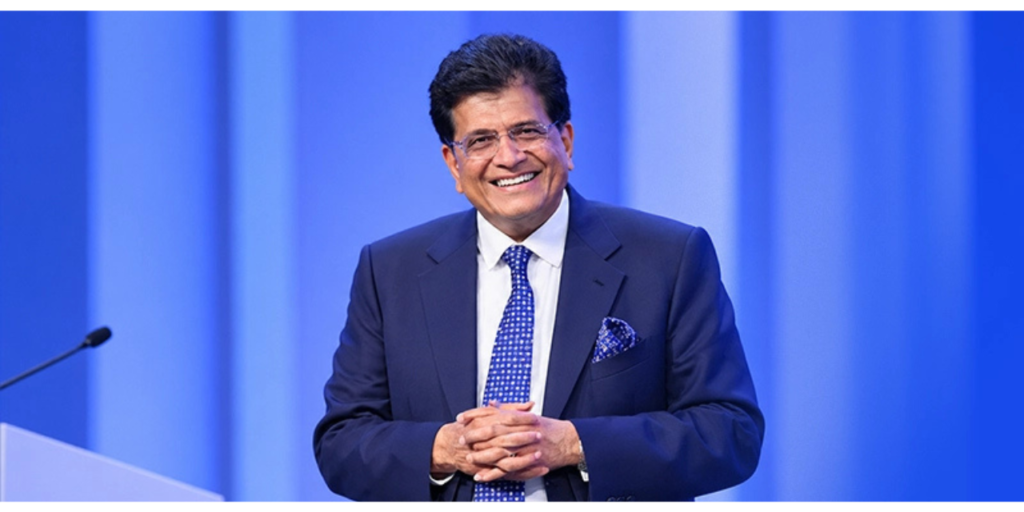
Piyush Goyal urges Indian and British businesses to use the trade agreement actively, as lower tariffs, simplified customs procedures and services access create opportunities for MSMEs.
India’s Comprehensive Economic and Trade Agreement (CETA) with the United Kingdom offers opportunities for micro, small and medium enterprises (MSMEs) across textiles, leather, footwear and services. Lower import duties on eligible Indian exports, simplified customs procedures and provisions for service providers could help businesses strengthen their presence in the UK market.
Commerce and Industry Minister Piyush Goyal has urged MSMEs, farmers, fishermen, startups and service providers in both countries to convert the agreement into commercial opportunities. His message is clear: the agreement is “a piece of paper until you make the best of it.”
For small exporters, the next step is to understand the agreement’s provisions, meet compliance requirements and identify the right buyers and product segments.
What Did Piyush Goyal Say About the India-UK Trade Deal?
Goyal encouraged Indian and British businesses to identify niche opportunities under CETA and work together to realise the agreement’s potential.
“The list is huge. It’s for us to find the right niche,” he said, calling on stakeholders to support one another in using the agreement.
He highlighted the complementary strengths of the two economies across goods, services, investment, innovation, education and tourism. He also emphasised the need to communicate the agreement’s opportunities to “every MSME” and “every farmer or fisherman in both countries.”
Goyal acknowledged that the negotiations required perseverance, particularly in protecting sensitive interests while creating new opportunities. He said both governments remained committed to supporting businesses seeking to benefit from the agreement.
How Can MSMEs Benefit from the India-UK CETA?
The agreement offers three important areas of opportunity for eligible businesses: tariff reductions, streamlined customs procedures and improved access for service providers.
1. Lower Tariffs on Indian Exports to the UK
According to an analysis by ORF Online cited in the supplied material, the agreement provides for the elimination of duties on 99.6% of Indian exports to the UK.
These tariff concessions could improve the price competitiveness of Indian products in the British market. Textiles, leather and footwear are among the sectors expected to benefit.
However, the actual advantage for an exporter depends on whether the product qualifies for preferential treatment, whether the applicable rules of origin are satisfied and whether the business can meet UK buyers’ requirements.
2. Simplified Customs Procedures
CETA includes provisions for self-certification of origin and a 48-hour customs-release target.
These measures are intended to help streamline export documentation and border procedures. For MSMEs with limited administrative resources, reduced paperwork and fewer delays could lower the cost of doing business.
Exporters will still need to understand the applicable documentation requirements and procedures for claiming preferential tariff treatment.
3. Opportunities for Service Providers
The agreement also provides opportunities for eligible Indian service providers through provisions relating to professional mobility and recognition of qualifications.
Goyal highlighted finance, insurance, hospitality, architecture and accounting, alongside startups and educational institutions, as areas with potential for stronger bilateral engagement.
Businesses and professionals will need to check the specific eligibility conditions and recognition requirements applicable to their fields.
Which Sectors Could Benefit from the India-UK CETA?
| Sector | Potential opportunity | Key requirement |
|---|---|---|
| Textiles and apparel | Improved price competitiveness through tariff concessions | Quality, design, production capacity and sustainability compliance |
| Leather and footwear | Lower duties on eligible exports | Testing, certification, traceability and buyer compliance |
| Professional services | Opportunities under services and mobility provisions | Professional eligibility and qualification recognition |
| Startups and education | Greater scope for bilateral partnerships | Identify UK partners and relevant market opportunities |
The extent of the benefit will vary by product, tariff classification, rules of origin and the requirements applicable to each market.
What Does the India-UK CETA Mean for Textile Exporters?
Textile and apparel exporters could gain from lower tariffs on eligible products, potentially improving their competitiveness against suppliers from other countries.
The opportunity comes as Indian textile exports continue to attract attention amid broader efforts to expand the industry’s global presence. The supplied material notes that textile exports rose nearly 10% in June, although weaker apparel performance kept overall export growth flat. It also highlights the government’s ambition to build a $350 billion textile industry by 2030.
However, tariff reductions alone will not guarantee export orders.
MSMEs must also demonstrate consistent product quality, reliable delivery schedules, suitable designs and compliance with sustainability requirements. Buyers may assess these factors alongside price when selecting suppliers and placing repeat orders.
For textile manufacturers, the priority should be to identify products with a genuine competitive advantage in the UK market and align production and compliance capabilities with buyer expectations.
Leather and Footwear Exporters Must Prepare for Compliance
Leather and footwear businesses are also expected to benefit from tariff concessions under the agreement.
However, technical requirements, quality standards, testing, certification and traceability can create challenges for smaller exporters. If businesses are not prepared to meet these requirements, the benefit of lower tariffs may be reduced.
The ORF Online analysis cited in the supplied material recommends support for testing, certification and traceability, particularly in sectors facing demanding technical requirements.
For leather MSMEs, understanding these requirements early can help reduce barriers when pursuing UK customers.
Why Trade Agreement Utilisation Matters
Signing a trade agreement does not automatically translate into higher exports. Businesses must understand the provisions and use them correctly.
Trade-policy analysis cited by The Economic Times puts India’s historical utilisation of existing free trade agreements at around 25%, compared with 70–80% in many developed economies.
The difference highlights the challenges exporters may face in accessing negotiated benefits. These include limited awareness, documentation requirements, rules-of-origin compliance and the cost of claiming preferential treatment.
For smaller businesses, these challenges can be particularly significant because they may lack dedicated teams to manage trade compliance.
This is the context behind Goyal’s description of the agreement as “a piece of paper until you make the best of it.” The commercial impact will depend on how effectively businesses use the opportunities available to them.
How Can MSMEs Get Practical Support?
The ORF Online analysis recommends moving beyond general awareness campaigns towards sector-specific and cluster-level implementation support.
Export promotion councils, state governments and MSME associations could help businesses understand product eligibility, navigate documentation, connect with overseas buyers and resolve compliance issues.
Support for testing, certification and traceability could also help exporters address non-tariff barriers that might otherwise reduce the benefits of lower tariffs.
Such assistance is particularly relevant to smaller businesses that need practical guidance to enter or expand in international markets.
Five Steps MSMEs Can Take Now
Businesses looking to explore the India-UK CETA can begin with the following actions:
- Check product eligibility: Confirm the relevant tariff classification and whether the product qualifies for preferential treatment.
- Understand rules of origin: Identify the applicable origin requirements and documentation, including procedures for self-certification.
- Seek industry guidance: Contact the relevant export promotion council, industry association or MSME support organisation.
- Prepare for buyer requirements: Review quality, design, sustainability, testing and traceability expectations in the UK market.
- Identify suitable UK buyers: Focus on specific product segments and customer requirements rather than approaching the market without a clear strategy.
Conclusion: Converting Trade Access into Export Growth
The India-UK CETA creates opportunities through tariff concessions, customs facilitation and provisions for service providers. Yet the agreement’s commercial impact will depend on businesses understanding the rules, meeting market requirements and actively developing customer relationships.
For Indian textile, apparel, leather and footwear MSMEs, the priority is to translate improved market access into competitive products, reliable supply and lasting buyer relationships.
Goyal’s message places the responsibility on businesses to identify their opportunities and make effective use of the agreement. The next test will be how successfully MSMEs turn these provisions into actual export orders.