
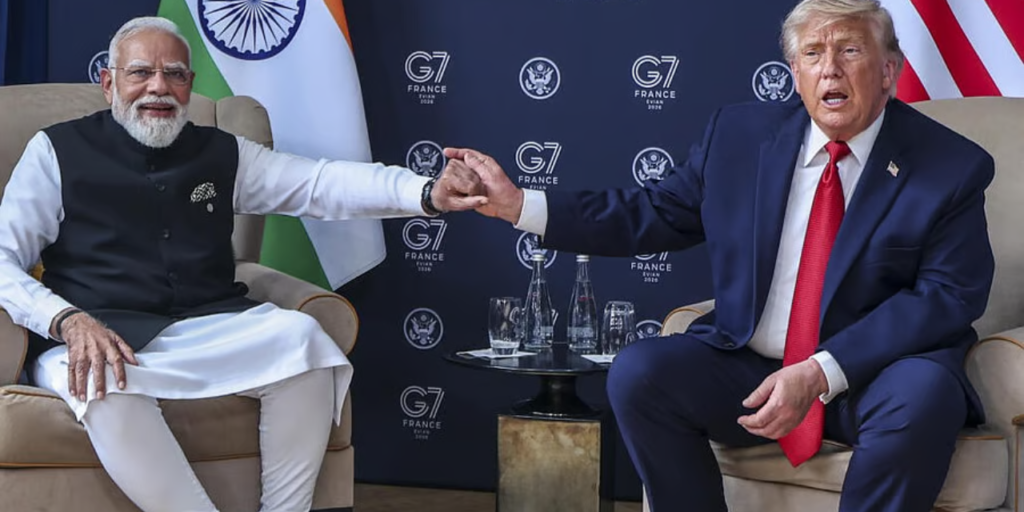
India and the United States face a critical phase in their bilateral relationship, with economic disagreements and shifting global power dynamics testing a partnership built on shared strategic interests. Bridging differences, reconciling national priorities and maintaining cooperation will be essential to sustaining the relationship, according to an analysis published in Deccan Herald on October 17, 2026.
The relationship has expanded over recent decades through cooperation in defence, technology, trade, energy and regional security. However, differences over tariffs, market access, immigration and strategic priorities have created uncertainty for businesses and policymakers in both countries.
Trade and Tariffs Remain Major Challenges
Trade has emerged as a central source of friction. The newspaper analysis highlights the challenges created by tariff measures, stalled negotiations over a bilateral trade agreement and uncertainty surrounding market access.
The article notes that India’s exports have faced higher tariffs and increased uncertainty, while businesses continue to seek predictable conditions for trade and investment. Differences involving agricultural products, intellectual property rights, data economy regulations and other market-access issues have also complicated negotiations.
A more stable trade framework could help strengthen commercial ties, improve business confidence and support investment across manufacturing and technology-related sectors.
Immigration and Talent Mobility Affect Economic Engagement
Restrictions affecting Indian professionals and student mobility have added another dimension to bilateral tensions. Indian technology companies, service providers and businesses with operations in the United States depend in part on access to skilled talent and predictable immigration procedures.
Changes to visa policies and related requirements can affect recruitment, project delivery, education and cross-border business operations. Greater clarity on talent mobility could therefore support cooperation in technology, research and services.
Strategic and Defence Cooperation Remains Important
Despite economic differences, India and the United States continue to share interests in regional stability, maritime security and a balanced Indo-Pacific order.
Defence cooperation has expanded through military engagement, technology partnerships and discussions on advanced capabilities. The relationship also includes cooperation in critical and emerging technologies, clean energy and supply-chain resilience.
The analysis highlights the importance of maintaining these strategic channels even when disagreements arise in trade and other policy areas.
Energy Security and Supply Chains Add to the Partnership
Energy security has become increasingly significant as countries reassess supply chains and respond to geopolitical disruptions. India and the United States have opportunities to work together in energy technology, critical materials and other areas linked to economic resilience.
Cooperation in these fields could help diversify supply chains, support industrial development and strengthen links between businesses in both countries.
A Changing Global Order Requires Continued Engagement
The broader geopolitical environment is adding complexity to India–US relations. Both countries are adjusting to changing power dynamics, competing economic priorities and evolving international partnerships.
The newspaper analysis argues that the relationship should not be viewed solely through individual trade disputes or short-term disagreements. Continued diplomatic engagement, attention to each country’s concerns and practical cooperation could help preserve the partnership’s long-term value.
India and the United States have opportunities to advance shared interests through dialogue, predictable economic policies and collaboration in strategic sectors. The challenge will be to manage differences without undermining the broader relationship.
As both countries navigate this period of uncertainty, sustained engagement and a pragmatic approach to trade, technology, defence and global governance will remain important to the future of India–US ties.