
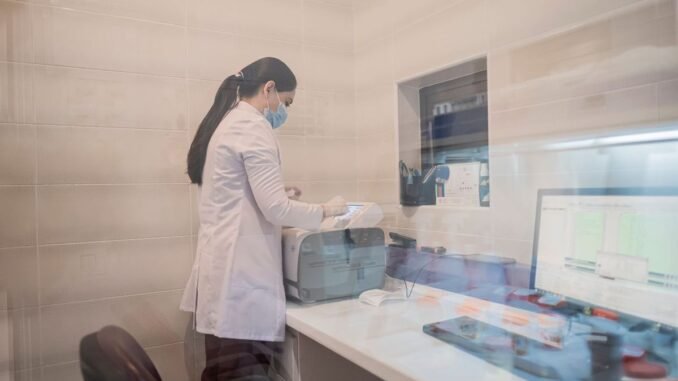
India’s eight Centres of Excellence support testing, research, product development and training across key technical textile segments.
India’s technical textile industry depends on specialised research and testing facilities to develop products for sectors such as healthcare, agriculture, infrastructure, construction and personal protection. The country’s network of eight Centres of Excellence (CoEs) plays an important role in supporting this development.
These centres provide testing, product development and training facilities for manufacturers. They help small and medium-sized companies access testing infrastructure and evaluate products against Indian and international standards without investing in expensive equipment.
The network originated from the Technology Mission on Technical Textiles, announced in 2007. Four centres covering geotech, protech, meditech and agrotech were established in 2008–09. Four additional centres were subsequently added to cover other technical textile segments.
India’s Eight Centres of Excellence for Technical Textiles
According to a Ministry of Textiles reply in the Lok Sabha in August 2021, the eight Centres of Excellence and their host institutions are:
- Agrotech: SASMIRA, Mumbai
- Geotech: BTRA, Mumbai
- Meditech: SITRA, Coimbatore
- Protech: NITRA, Ghaziabad
- Composites: ATIRA, Ahmedabad
- Nonwovens: DKTE, Ichalkaranji
- Indutech: PSG College of Technology, Coimbatore
- Sportech: Wool Research Association (WRA), Thane
Each centre focuses on a specific technical textile segment. Together, they provide specialised facilities and expertise to support industry requirements.
Government Support for the Eight Centres
Government funding has supported the development of infrastructure and technical capabilities across the eight centres.
The Ministry of Textiles’ Lok Sabha reply in August 2021 reported total government support of ₹125.13 crore. Funding ranged from ₹6.77 crore for BTRA to ₹23.38 crore for DKTE.
The typical funding structure for a new Centre of Excellence included a sanctioned amount of ₹25 crore, distributed as follows:
- ₹20 crore: Equipment
- ₹2 crore: Training
- ₹3 crore: Running costs
This support helps research institutions strengthen testing infrastructure, develop technical expertise and provide services to manufacturers.
National Technical Textiles Mission Strengthens Research
Launched in 2020, the National Technical Textiles Mission (NTTM) builds on the country’s technical textile research and development ecosystem. The mission has an overall outlay of ₹1,480 crore.
By February 2026, it had approved:
- 168 research projects
- 24 start-ups
- 45 educational institutes
The mission has also supported the development of indigenous testing equipment and specialised demonstration facilities.
One example is NITRA’s development of three locally manufactured heat-resistance testers. With NTTM support, these machines cost approximately ₹5–10 lakh each, compared with ₹15–40 lakh for imported units.
The equipment has also helped reduce testing time for protective fabrics. The process, which previously took around 30 days, can now be completed in approximately 3–5 days.
Another development came in December 2024, when a climate-smart agrotextile demonstration centre operated by SASMIRA opened at Navsari in Gujarat.
Growing Importance of Testing and Certification
Testing infrastructure is becoming increasingly important as technical textile products face greater quality and performance requirements.
Several technical textile products are covered by Bureau of Indian Standards (BIS) Quality Control Orders. Manufacturers must therefore ensure that their products meet the applicable standards.
The eight Centres of Excellence provide an important link between research institutions and industry. Their facilities support product testing, technology development, training and the wider adoption of technical textiles in India.
As the sector expands into applications ranging from medical textiles and protective clothing to geotextiles and composites, these centres are expected to remain important to India’s technical textile development ecosystem.